
In 2020, Tobi Oyewole had a company car, an official apartment, and two sponsored trips to China behind him. Then he left for a new job that paid less.
“I wasn’t really satisfied with the kind of work I was doing,” he says.
For Oyewole, a petroleum engineering graduate turned software engineer, taking the pay cut was a first in another sense. Until then, someone else had made most of his career decisions for him.
As a boy, he daydreamed about playing football professionally and even won a prize in secondary school. He also wanted to become a pilot. But his father had other plans, teaching his son maths himself in the hope that he would pursue engineering.
“I’m just going to do what they wanted. I am going to be a good child,” Oyewole remembers thinking.
He initially applied to the University of Lagos (UNILAG) in south-west Nigeria to study electrical engineering, but eventually settled on petroleum engineering, another course his father approved of.
“Oil and gas is not that bad either,” he says. He enrolled in 2011.
Yet the oil and gas job he had trained for never materialised. Despite sending out applications, he heard nothing back.
“Trying to get an oil and gas job was not very easy,” he says. “I still think about it now. Maybe I didn’t try hard enough.”
Oyewole’s interest in technology and coding began in his second year at UNILAG, when he started building websites in Adobe Dreamweaver and teaching himself HTML and CSS along the way.
“I’d just be learning a few things, just to see what’s happening in this tech thing,” he says. “At the time, I wasn’t even into tech, and it wasn’t tech the way we see tech now. We just had some guys who came to teach about building stuff on the Internet.”
His growing interest in programming soon began to affect his academic performance.
“My 200-level GPA [grade point average] was the worst I ever had, because I was really inquisitive about programming and I was concentrating on it badly,” he says. By his third year, however, he had set aside his coding interest to focus on his petroleum engineering degree.
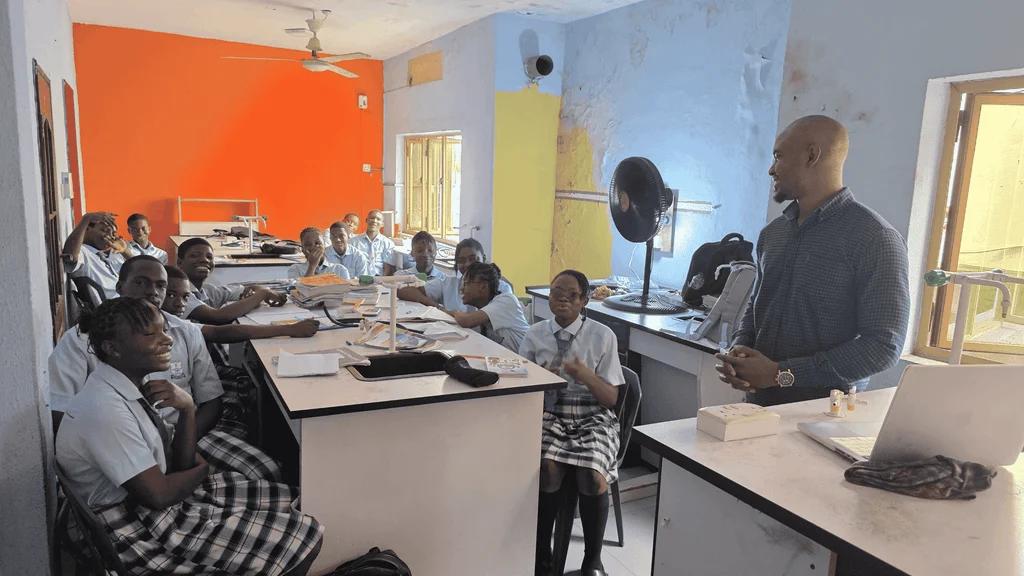
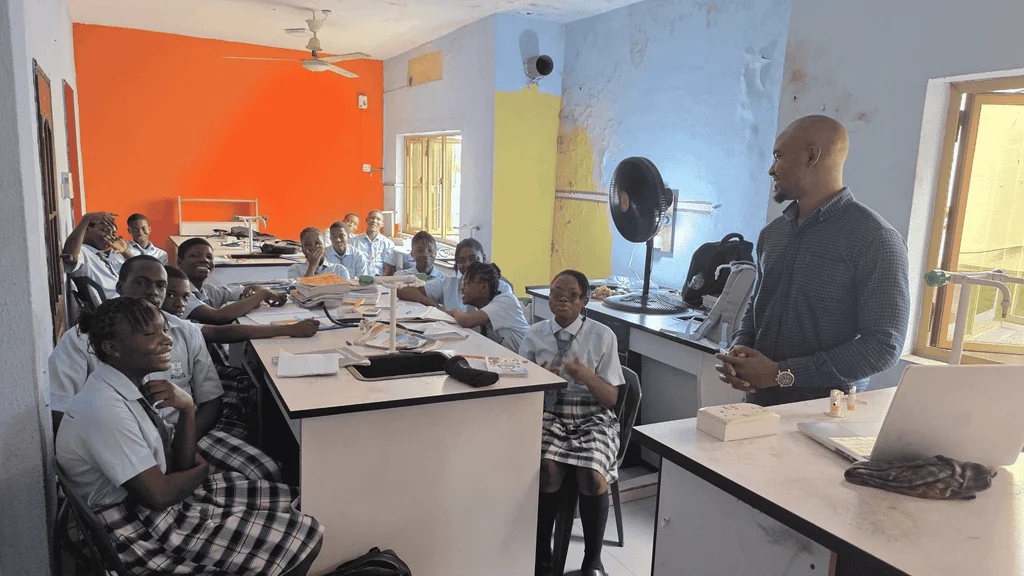
He would eventually return to programming, a decision he says he has never regretted. Today, he is also helping secondary school students discover opportunities in technology, giving others an introduction to a path he once found for himself.
Dumping oil and gas
After graduating from UNILAG in 2016, Oyewole said he had hoped to work in the oil and gas industry. However, he joined MOJEC, an electrical company, instead. The company, which builds smart electricity metres gave him his first real shot at paid employment after tertiary studies.
“I didn’t really have much experience. It was just time to put the body to work. Anything they threw at me, I was ready to do it,” he says.
He spent much of his time programming meters at the factory, supporting the information technology (IT) team, and fixing the office Internet. MOJEC also gave him room to explore other areas of the business. He describes it as “a canvas you can paint your life however you want,” where employees could take on projects with few restrictions. One such project involved renewable energy and took him to China twice on company-sponsored trips, he says.
“It was a place where you could give yourself out, and they were ready to pour back into you,” he says.
His experience gradually drew him towards the technology side of the business, prompting him to consider what he could build rather than simply fixing existing problems. He enrolled at New Horizons, an information and communication technology (ICT) training institute that offers professional certification programmes, to develop his skills, studying programming languages C# and .NET.
Although he still had his sights on oil and gas, seeing colleagues receive technology job offers and leave MOJEC about three years into his employment made him reconsider.
“I knew that I had to take this tech seriously,” he says. “I don’t think I can be putting my eyes out on oil and gas stuff anymore. This is the time for me to get fully focused on building a career in software engineering.”
In 2020, he left MOJEC and decided to spend time strengthening his programming skills through YouTube tutorials and other learning resources.
Building software
After spending time at home developing his coding skills, Oyewole joined Reliance Infosystems, an IT consulting firm and Microsoft partner, in November 2020.
Placed on the company’s customer relationship management (CRM) team, he worked with Microsoft Dynamics 365. Although his role involved learning to use and administer the platform, he was far more interested in understanding how to build software himself.
“The thing with Dynamics 365 and the likes is that these are apps that have already been built. You have to know how to use them well. But I was much more interested in building those apps myself,” he says.
He likened this curiosity to using Microsoft Excel while wanting to understand how the spreadsheet was built.
“It’s one thing to know how to use Excel well, but there are also people who built Excel from scratch,” Oyewole said.
That curiosity led him to build applications that integrated with Dynamics 365. When a client needed a custom application that no one else on the team could develop, Oyewole says he took on the project and built it from scratch.
“That was one project that really boosted my skills,” he says.
He left Reliance Infosystems in October 2021 and joined Softcom, a technology company building digital solutions, in 2022. There, he worked on Kwiksell, a product that helped merchants sell online, manage inventory, and track sales.
Working with experienced engineers introduced him to more structured development practices, including daily stand-ups, sprints, and customer validation sessions. He also began to understand how engineering decisions connected to customer needs and business goals.
“At Softcom, I started seeing systems that scale and engineers offering really smart solutions to problems,” he says.
The job also gave him the opportunity to move beyond tutorials and personal projects, deploying software to real customers, observing how they used it and learning what it took to build and maintain production software.
He also learnt to balance his interests as an engineer with the needs of the product and to work at a faster pace.
But his time at Softcom was short-lived. Financial difficulties eventually led to layoffs.
“It was my first experience of being laid off,” he says.
The experience was particularly difficult because he struggled to tell his parents, who had been sceptical about his decision to pursue software engineering.
“My layoff from Softcom was not funny at all. It was so bad I could not even tell my parents,” he says. “I was scared because my parents weren’t really okay with me venturing into software. It wasn’t something they saw potential in.”
It was one of the lowest points in his career. He began questioning his decision to pursue software engineering but knew he had to keep applying for jobs and find another opportunity.
Working with a global engineering team
In 2023, Oyewole persisted and eventually joined Andela, a Nigerian-founded talent marketplace that became a unicorn startup in 2021 after raising $20 million at a $1.5 billion valuation.
“I applied to Andela like four times before I finally got in,” he says. “After getting into Andela, I went for a couple of client interviews.”
One led to an engagement with Science Corporation, a US-based biotech startup, marking his first international role. Working with colleagues in Egypt, Pakistan and the United States, he gained experience collaborating across time zones and adapting to a more demanding engineering culture.
“It was an awesome experience because at Science, it was much more core engineering, being able to think critically about what you write,” he says.
According to Oyewole, the company’s head of engineering often reminded the team that “the best kind of code you write is no code,” encouraging engineers to keep solutions simple and think carefully before making changes.
This also pushed Oyewole to expand his skills beyond frontend specialisation; it allowed him to learn how to fix issues on the company’s Ruby on Rails server and make design decisions in the absence of a dedicated designer, he told TechCabal.
“But it was an eye-opener into global standards for technology. Being able to write code the right way, not just writing code as usual, but writing it to work,” he says.
Science was developing software to help scientists digitise experiments and track their findings. As the company grew, it shifted towards having engineers work alongside scientists in person to better understand their challenges. The change ultimately led to Oyewole’s layoff.
“We got laid off from Science because they were moving to a model where they needed engineers to be physically at the company,” he says. “They needed people who could interface with those scientists themselves to understand the pain points that the scientists were facing.”
His second international role was with Mars, best known for its chocolate brands. He joined the company’s Petcare brand as a frontend engineer on the Kinship team. The experience introduced him to a market with a very different attitude towards pets from what he was used to in Nigeria.
“When I joined Kinship US, I was the only Nigerian on my team. There was lots of culture shock, talking to different people, especially about pets,” he says. “Coming from Nigeria, where people don’t really care about pets as much as they do out there, joining the company meant you literally had to care for pets.”
His team built digital products for pet owners, including platforms connecting them with veterinarians and animal shelters, as well as tools for purchasing pet food and publishing pet-care content.
Kinship also gave Oyewole room to expand beyond frontend development. During regular check-ins, his manager encouraged him to discuss his career ambitions, and he expressed an interest in understanding the full software development lifecycle, from frontend and backend development to deployment.
“I might not be an expert at everything, but I wanted enough knowledge as an engineer to know how this works,” he says.
His manager responded by assigning him backend tasks, giving him opportunities to build features, review code, and work alongside backend engineers.
He also took on his first team leadership role, managing engineers across time zones and leading projects from start to finish.
“At that point, it was not just about writing code, but also being able to manage people,” he says. “It’s one thing to build for yourself. It’s another to manage people and scale quickly while you’re also building.”
He left the company in June 2026.
Beyond writing code
Over the years, Oyewole has come to see technology less as an end in itself and more as a tool for solving problems, a perspective shaped by his experience working across industries.
“I see technology as an enabler. I think of technology as something that could help your process,” he says. “It’s nice if you are building something cool, but what’s best is something that makes money for you.”
He believes engineers must look beyond the technical appeal of what they build to consider the value it delivers to businesses and their customers. That perspective also shapes the projects he explores outside his regular work.
Towards the end of 2025, as interest in artificial intelligence grew, Oyewole began experimenting with Model Context Protocol (MCP), a way of connecting AI applications to external tools and information. He built a tool that allowed AI assistants to search Nigerian e-commerce platforms and compare product prices, according to him. Inspired by his own experience of trying to find the most affordable options online, he built it to work with existing AI chatbots, such as ChatGPT, rather than as a standalone application.
He also explored how MCPs could improve his work as a frontend engineer, experimenting with connecting Figma, a design tool, to his team’s codebase to reduce the manual work involved in translating designs into code.
His interest in the wider tech community led him to open-source. While reading the MCP documentation, he came across an issue involving the addition of agent skills and joined the team working on it. This allowed him to contribute to the technology’s development while collaborating with engineers from companies including Amazon and Google, according to him.
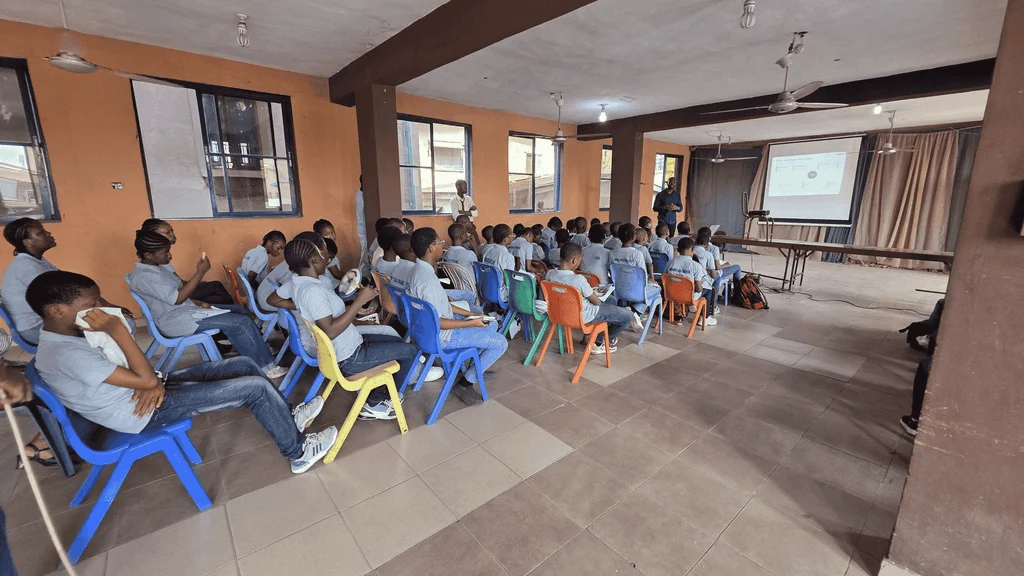
He hopes to continue contributing to open-source projects and speaking at technology events, particularly those aimed at helping younger developers. He is also planning talks at secondary schools around Lagos to introduce students to technology careers, explain how the websites and applications they use are built, and highlight the opportunities available in the industry.
Beyond these interests, Oyewole’s next career goal is to take on greater responsibility for how software products are built and managed. Having spent most of his career as an individual contributor, he is increasingly interested in the decisions that go beyond writing code: choosing which features to build, balancing business priorities with technical constraints, and ensuring products solve customers’ problems.
“Over the past six years, I’ve come to realise that building great software goes beyond writing code,” he says. “There’s also the people, planning, decision-making and coordination required to turn an idea into a product.”
He hopes to take on more leadership responsibilities, from mentoring engineers and leading technical discussions to participating in product planning.
“I’d love to be remembered as someone who was always about solving problems in any industry,” he says. “I believe impact goes beyond the software we write.”